Working with Nature
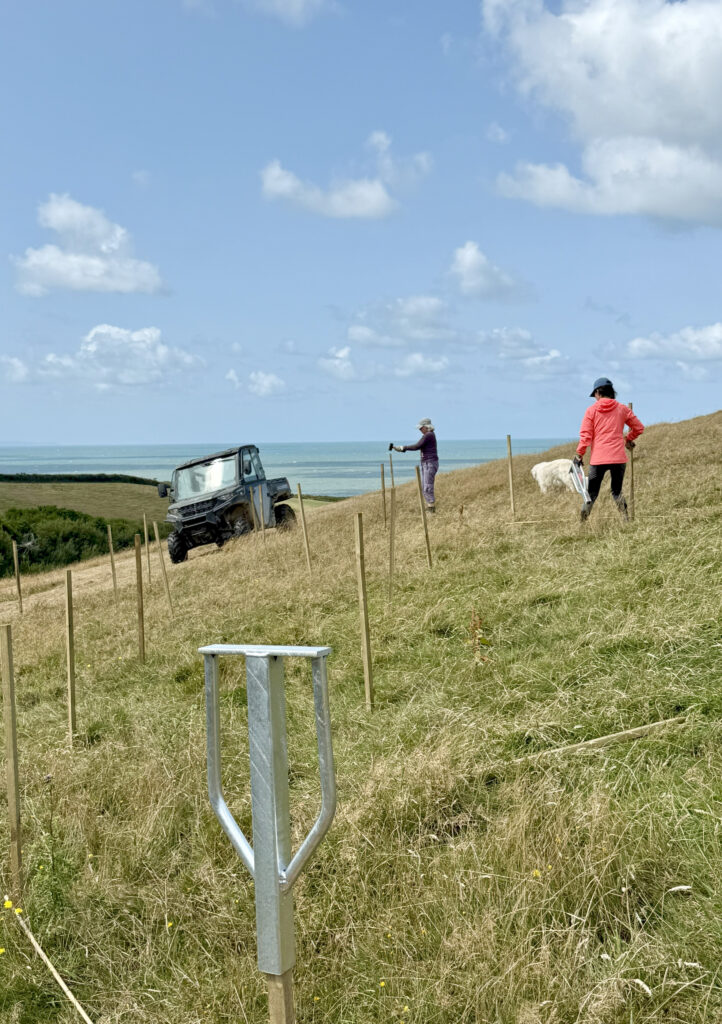
At Greencliff we look after 85 acres within the UNESCO Biosphere. When we arrived in 2020, the farm was shaped by years of sheep, cattle, and arable farming, with improved grassland, two woodlands, and some species-rich hedgerows.
A Vision for Rewilding
Our vision has been to embrace rewilding and encourage the return of temperate rainforest, once native to this coastal area, alongside wildflower meadows, scrub, hedgerows, ponds, banks and scrapes.
Learning & Growing
In 2020/21 we commissioned a biodiversity baseline survey with Matt at EAD Ecology and worked with landscape architect Chris alongside Andy from the Biosphere to shape a rewilding plan.
Our plan continues to evolve as natural processes take over. The new habitats are creating space for wildlife to thrive – from owls, hares and hedgehogs, a variety of insects, birds and bats, and even polecats.
Woodland Creation
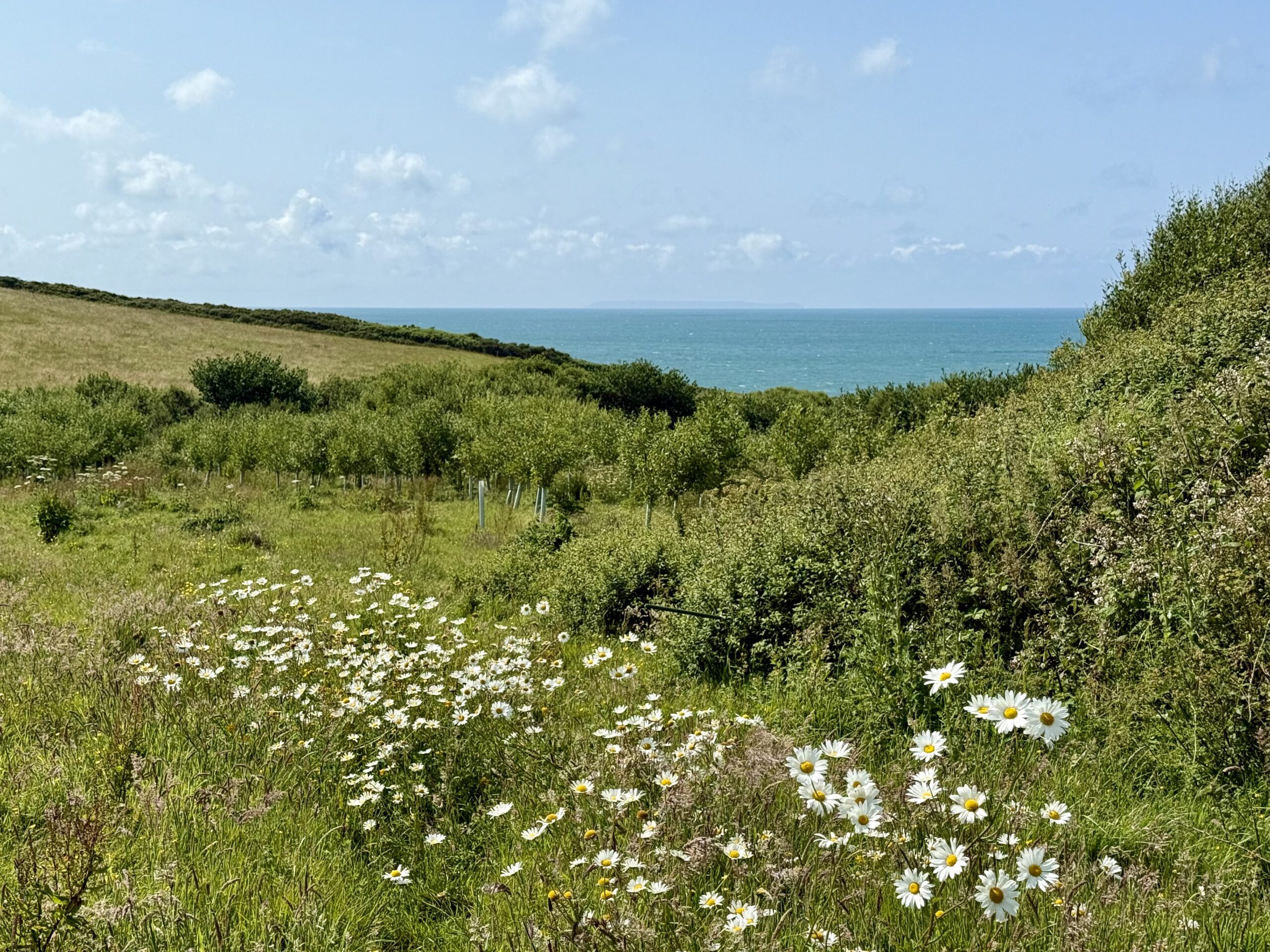
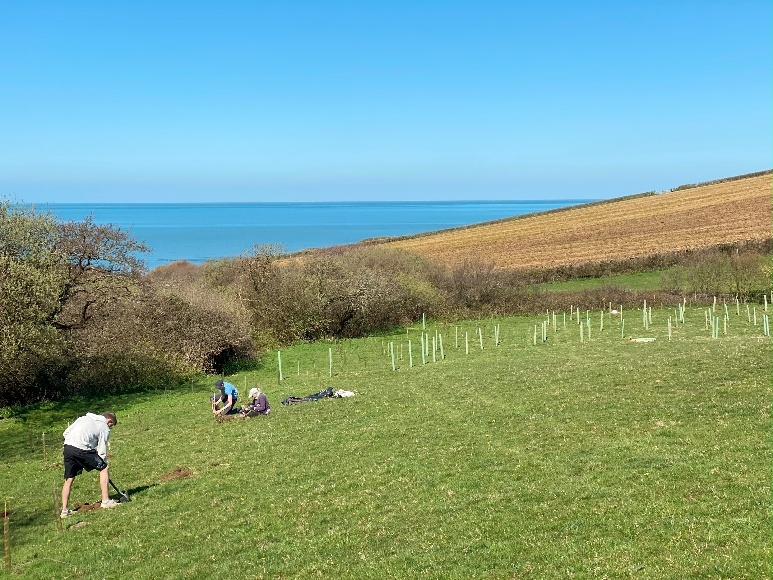
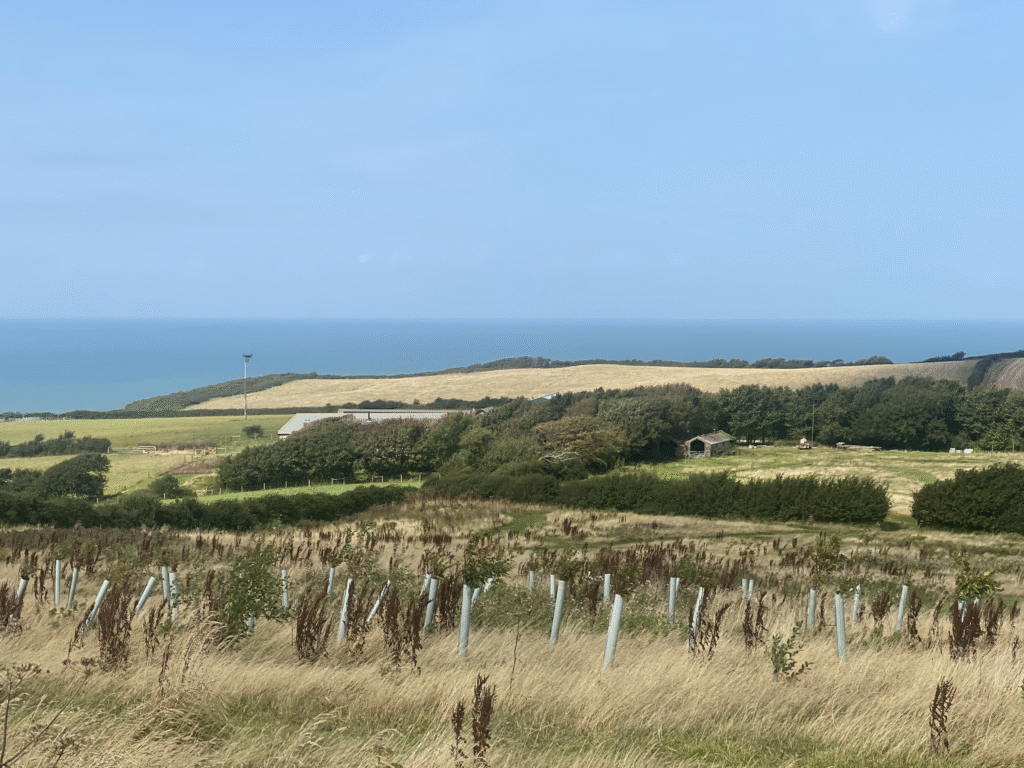
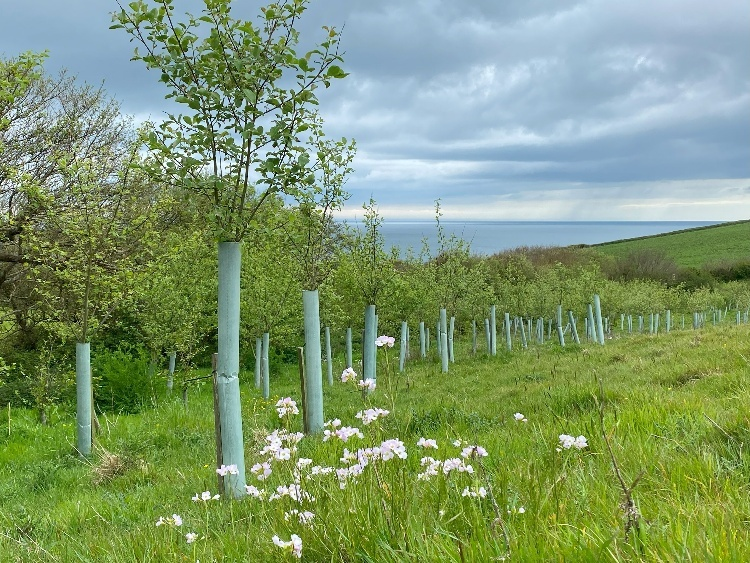
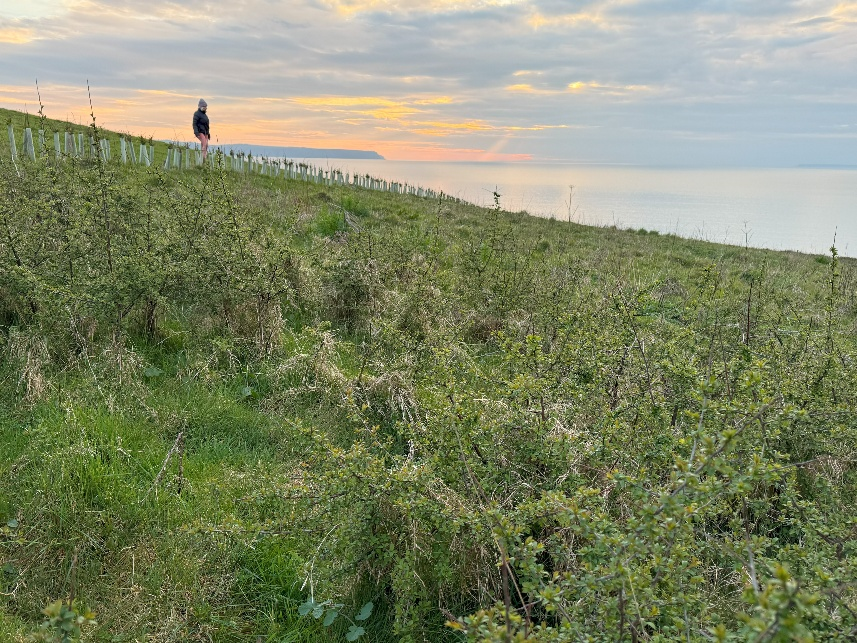
We’ve planted 7,300 trees across eleven areas of the farm, adding to the 3,350 trees already established by the previous owners. The trees we’ve planted are predominantly a diverse mix of native broadleaf species and woody shrubs, with a few non-native varieties included to provide early protection from the prevailing winds.



Hedgerows
The farm already boasts over 7km of hedgerow. Instead of trimming them, we’re allowing them to naturally expand, creating wonderful habitats for a variety of species. Additionally, we’ve planted 445 meters of new hedgerows across three areas, adding 2,665 hedging trees to further enrich the landscape.
Scrapes & Ponds
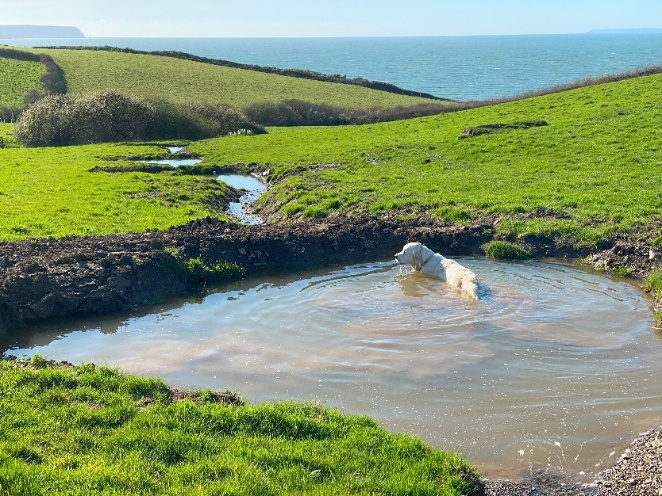
Working with Rob, we created five new ponds and ephemeral ponds across the farm, which have already begun to attract a diverse range of wildlife. More recently, we’ve teamed up with Nick and his colleague to massively enhance the diversity across two more of our fields, inspired by the work Nick has done on his land at Roborough.
The rewilding we have done with Nick includes a seven new stepped ponds, a number of small slot ponds, and cupped ponds, along with ephemeral scrapes and over 30 banks extending to 1.5km https://roboroughrewilders.org/greencliff-farm-project/
These areas of the farm are very exposed, so the banks will help create micro-habitats and shelter for new shrubs and trees to establish.



Wildflower Meadows
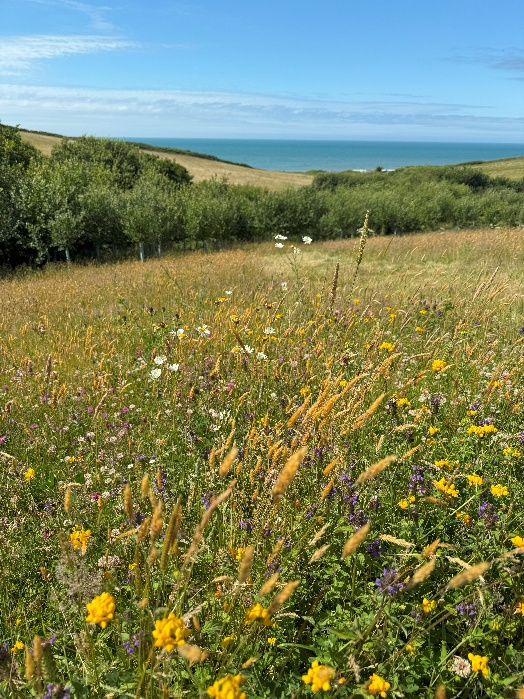
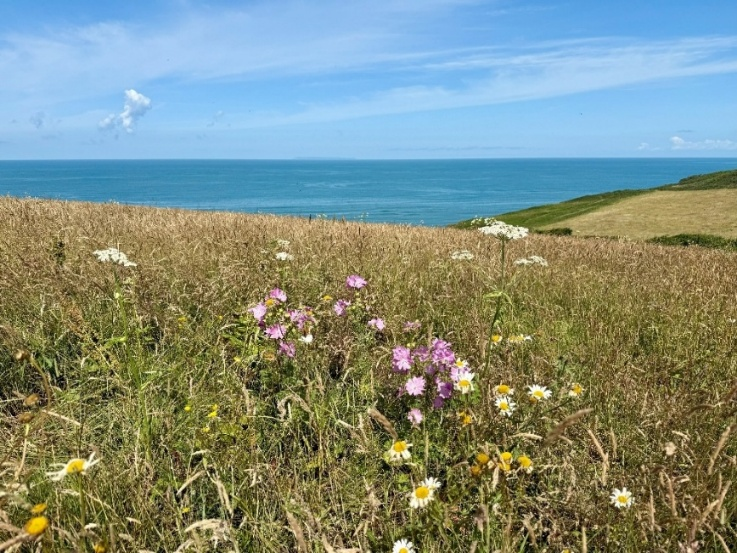
Wildflower meadows are a rich habitat which was missing from Greencliff and increasingly rare across the UK. While meadows are notoriously difficult to reinstate, we are doing our best through a variety of approaches.
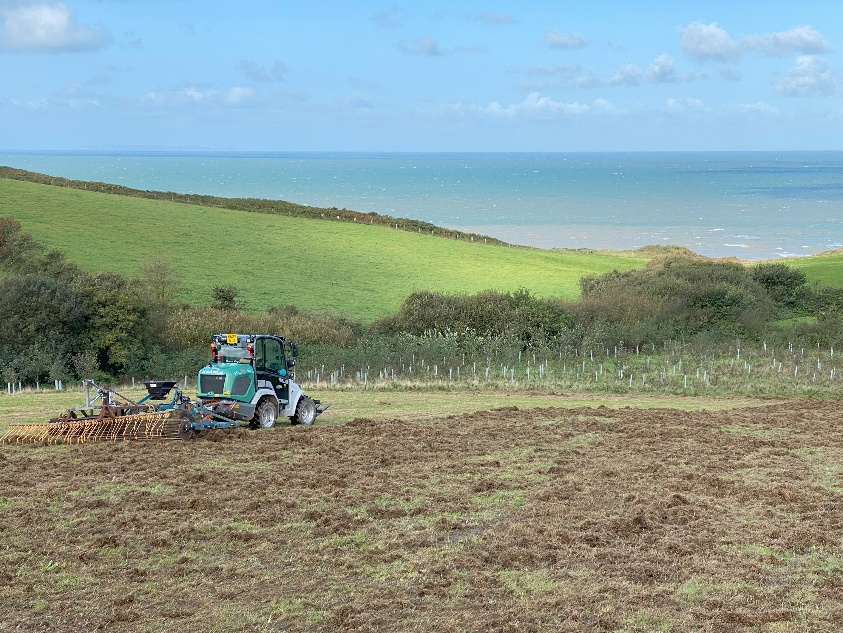
In collaboration with Darren from Bishop Bees, we’ve worked on a couple of fields where he used his Dutch harrow to prepare the soil building on the seed bank already present. After harrowing, we sowed a mix of wildflower and native grass seed, and we’re seeing encouraging results. We’re also working with Canns to manage these meadows, with late summer cutting and removal of the hay.
Additionally, we’ve taken one field that was previously arable and sown it with a different wildflower and grass seed mix. Another area, in collaboration with Neil, a neighbouring farmer, features a meadow rich with oxeye daisies and birdsfoot trefoil. We have also created five new smaller wildflower meadow areas in one of our fields right on the cliffs as part of the work with Nick.
Scrub & Natural Colonisation
We’ve set aside four areas across the farm to naturally rewild, allowing grassland to gradually evolve into scrubland without cutting or grazing by sheep. This has quickly led to a noticeable increase in the number of voles and other mammals, which has, in turn, attracted barn owls, a real delight.
We now see natural colonization taking place across the farm, with oak trees emerging in both scrub areas and between some of the tree planting. We’re also observing blackthorn extending from hedgerows, as well as hawthorn and willow spreading naturally. It’s fantastic to see nature doing what it does best.


Wildlife
In addition to the voles and barn owls, we’re seeing an increasing variety of wildlife across the farm. Rory, who conducts regular bird surveys, has noted a growing diversity of bird species, particularly in an area where we planted willow and alder. We’re pleased to have a healthy population of willow warblers and, more recently, reed warblers, alongside a variety of other bird species.
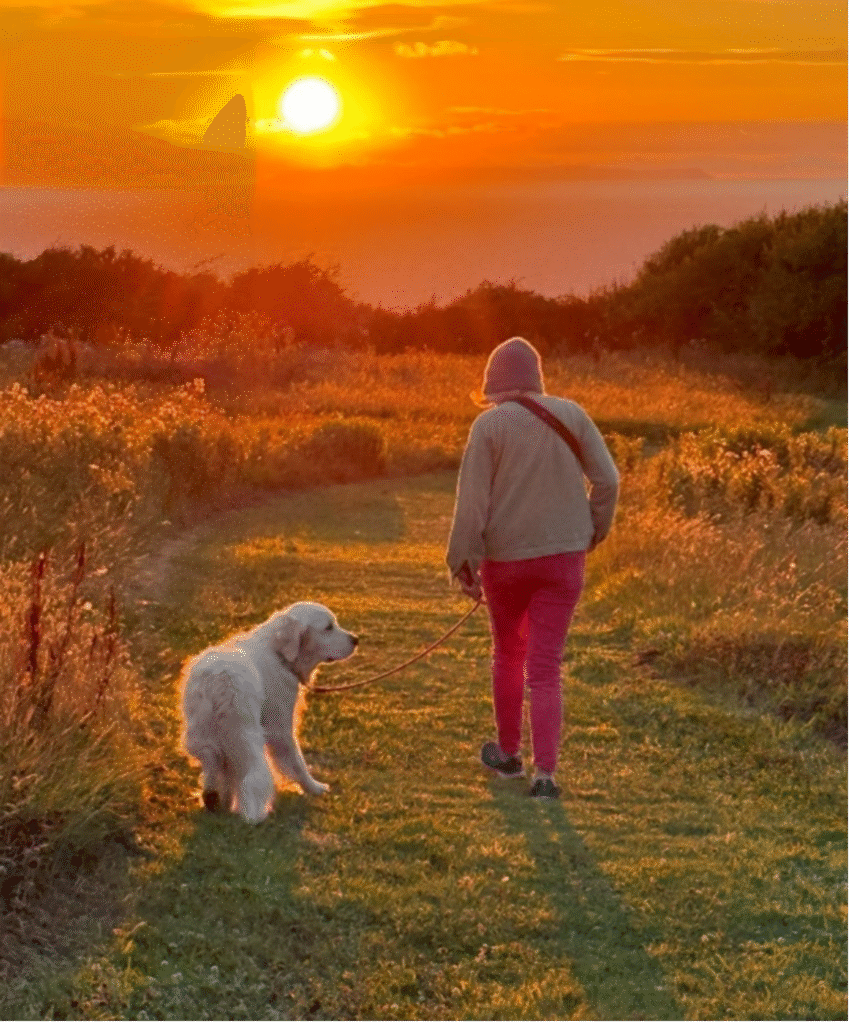
The hares are another delightful sight, with their population rapidly growing across the farm. After three years of waiting, we’re also thrilled to finally have hedgehogs. Rosa, our dog, is great at helping us find them at night, and we’ve recently spotted a good number of baby hedgehogs, which are thriving. Sue volunteers at Hedwig’s Rescue Centre in Bideford, and we now rehouse some of the hedgehogs here at Greencliff.
Our ponds are also attracting new life, with a range of species thriving in and around the water. In one corner of the farm, where we set up a trail cam by a newly created pond, we were excited to capture footage of a polecat!
Progress & Future Plans
The map below provides an overview of the habitat creation and restoration across the farm.
Looking ahead, we plan to continue the management of the woodland and we’re excited to see how the wildflower meadows continue to develop. We hope to expand these meadows into areas that are currently still improved grassland. This may include transferring green hay from our existing meadows.
We’ve set aside one field with the hope of establishing an agroforest – an area where sustainable produce can be grown in collaboration with a partner.
We’d also like to introduce heritage grazing across parts of the farm, as it’s so beneficial for biodiversity. If anyone can help us, for example, to introduce Red Devon cattle for low-density grazing, we’d love to collaborate on this next step.

Carbon Sequestration
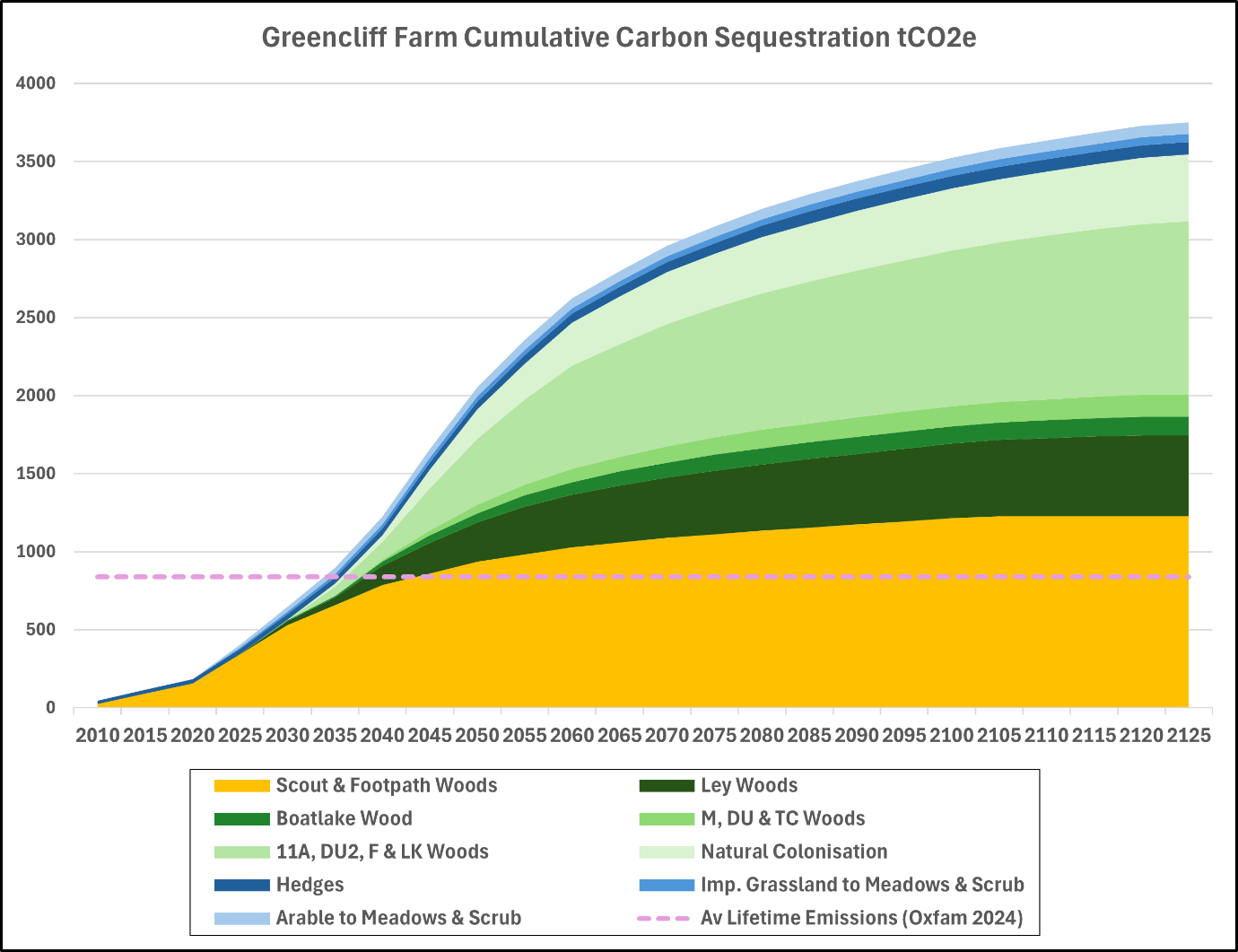
In addition to enhancing biodiversity, the rewilding is also playing an important role in sequestering carbon. To quantify this impact, we’ve calculated the sequestration profile for each of the woodland areas, using the UK Woodland Carbon Code methodology. The results are summarized in the plot below.
We’ve also accounted for carbon stored in other habitats, such as areas where arable land has been converted into meadows, using conservative estimates. Similarly, we’ve included sequestration from our hedgerows. For context, we’ve compared these figures to the average UK citizen’s lifetime emissions, based on research from Oxfam in 2024.
Join us in Rewilding
If you’d like to support our rewilding efforts, we’re looking for volunteers to join us in various tasks around the farm. From woodland and meadow management to other projects, there’s something for everyone. It’s a wonderful way to connect with nature and work alongside others who share our passion for the land.
We also welcome those interested in conducting their own wildlife surveys. It’s a joy to see our efforts through the eyes of others, and we hugely value the insights volunteers bring.
For volunteers who wish to stay longer than a day trip, we offer accommodation in our holiday barns, when available, at no cost. This is available to those who are serious about helping us enhance biodiversity on the farm.
If you’re staying as a holiday guest at one of our barns and are curious to learn more about the rewilding work we’re doing, please reach out. If we’re free, we’d be delighted to take you on a rewilding walk.